VOLIS:
Estonia’s councils,
online
The national system for local democracy: councils met, voted and published decisions online, and residents followed every sitting and took part.
- Industry
- GovTech
- Client
- Republic of Estonia, Ministry of the Interior
- Product
- Local e-democracy platform, 2009–2026
- What we did
- Design and development, end to end
Who uses it
VOLIS
- Meeting preparation
- Remote participation
- Electronic voting
- Automatic protocol
- Video stream
- Participatory budgets
- Polls
Connected to
Introduction
Move data, not people.
The Ministry of the Interior commissioned VOLIS in 2009 with EU funding: councils should be able to meet and take legally binding decisions from anywhere, and residents should see and shape them. Aram, M-One’s founder, built the system end to end. It ran for 17 years in Estonia, was piloted in Sweden and the Netherlands, and closed on 1 July 2026.
Solutions
One system for the whole decision: from the draft to the vote, the protocol and the resident watching it.
01. A whole sitting in one system
From the agenda to the published decision, nothing leaves VOLIS and nothing goes back to paper.
- 01
Preparation
Agenda, drafts and documents sent to members before the sitting.
- 02
Attendance
Members check in, in the hall, electronically or virtually.
- 03
Agenda
The agenda is accepted by vote.
- 04
Debate
Speech requests, amendments and the draft’s final text.
- 05
Vote
Open, by name or secret, signed with the national digital ID.
- 06
Protocol
Written automatically as the sitting runs.
- 07
Published
Decisions, protocol and video go public.
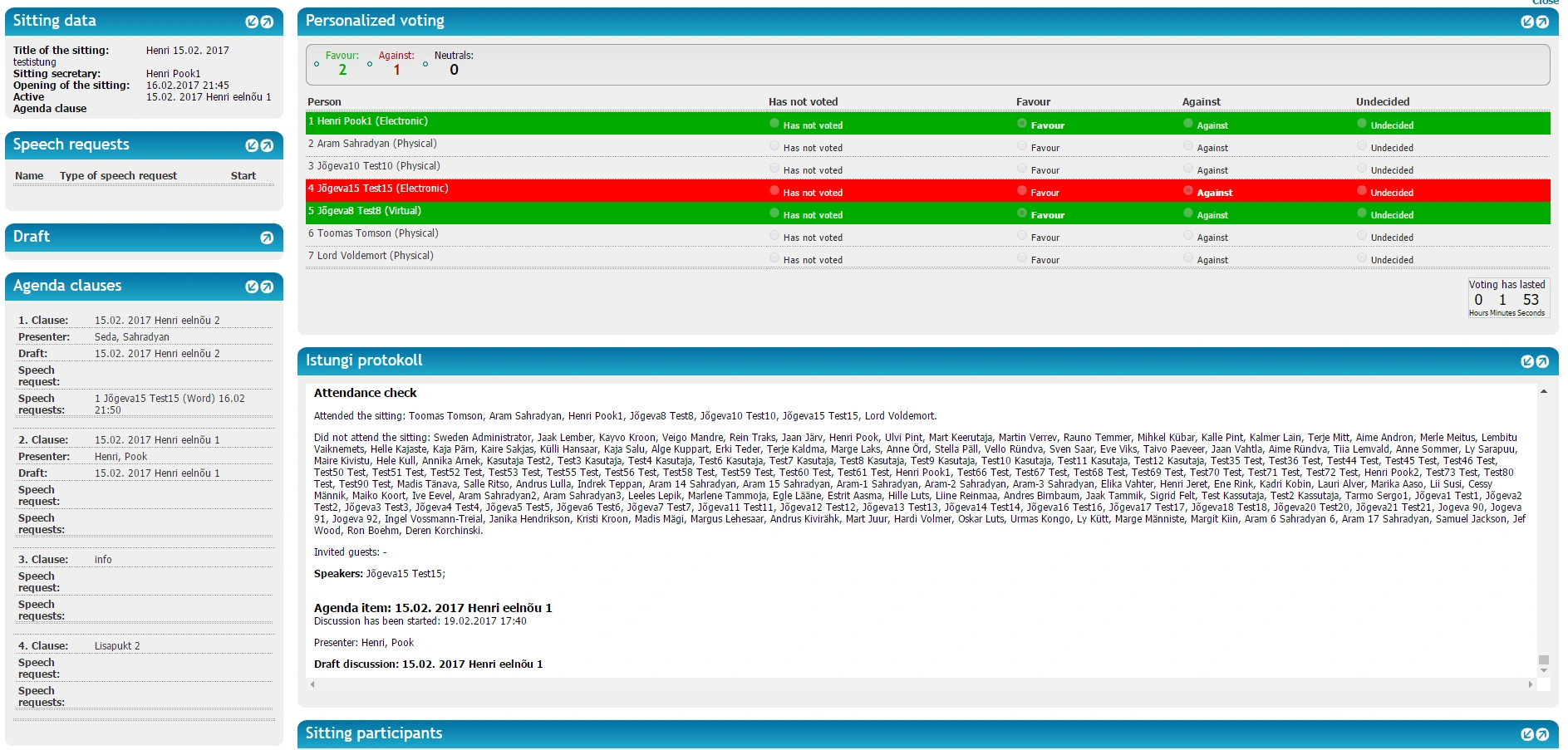
02. Every vote, in the room and online
The hall screen shows each member’s vote in real time, wherever they are taking part from.
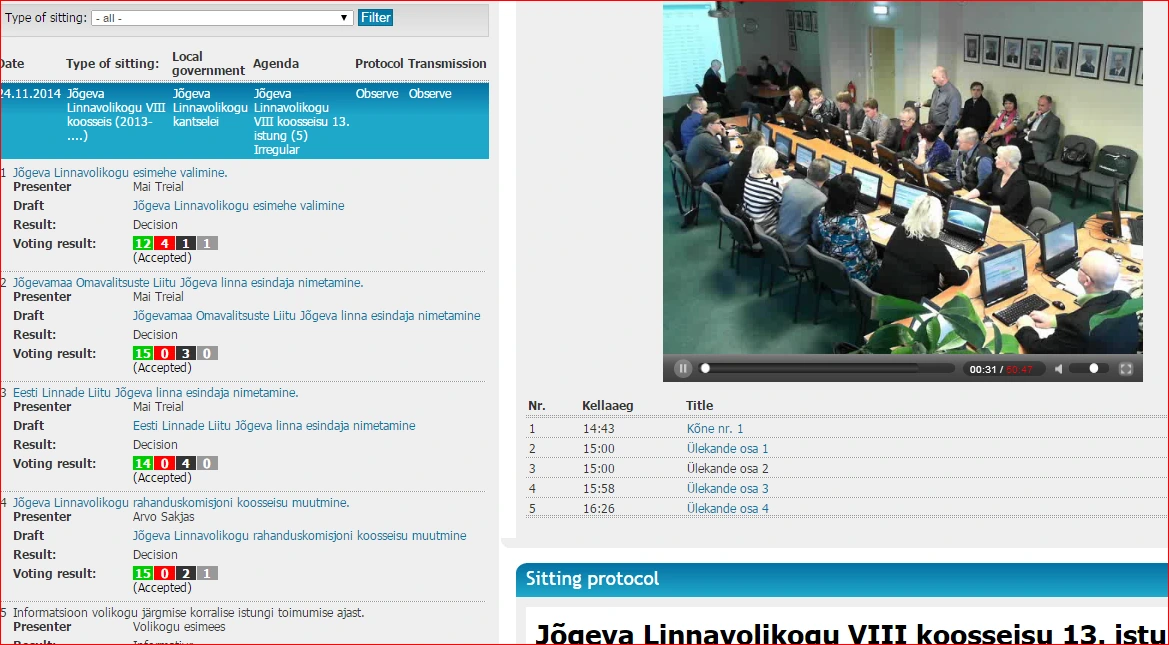
03. Democracy you can watch
Residents follow the sitting live: video, the agenda and every voting result.
04. Real decisions, made by residents
Two numbers from VOLIS itself: a participatory budget and a merger referendum.
Residents chose what the city funds
Participatory budget of Tartu, Estonia’s second-largest city, 2014
Residents voted on merging their municipality
Online referendum in a rural municipality, 2014
556 votes
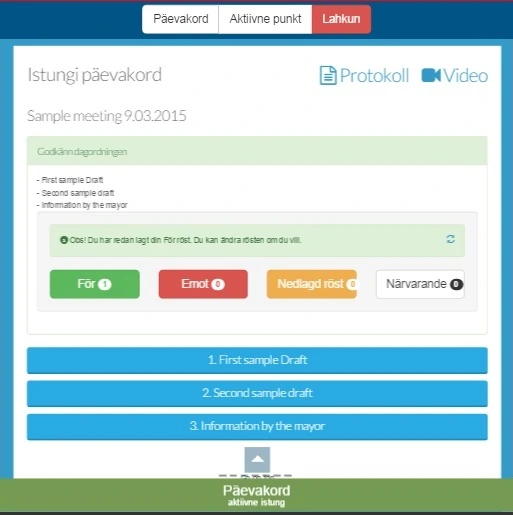
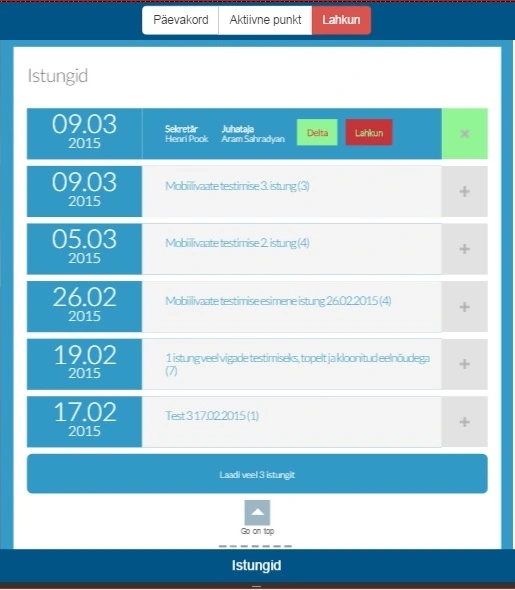
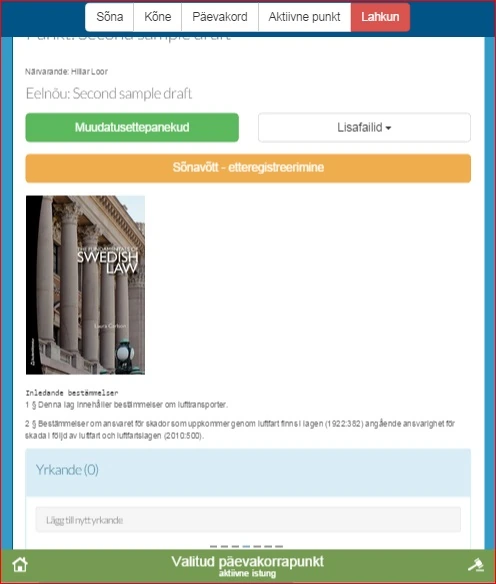
05. The same system on a phone
The mobile view has the same functions as the desktop one.
06. Built in Estonia, piloted abroad
One codebase for every country, with Estonian ID and registries switched off where they don’t apply.
Estonia
The national system for city and municipal councils
- Tartu
- Viljandi
- Kuressaare
- …and more
Sweden
Pilot for Sweden’s association of municipalities
- Gotland
- Nacka
- +6 municipalities
Netherlands
Open-government lab of a city and a university
- Deventer
- Saxion University
07. Seventeen years in service
- 2009
Commissioned
By Estonia’s Ministry of the Interior, with EU funding. First pilot in one region.
- 2013
Sweden
First pilots abroad, in two Swedish municipalities.
- 2014
19 councils
Across Estonia; six municipalities in Sweden and a city in the Netherlands.
- 2017
30+ councils
15 of them let residents decide part of the budget.
- 2026
Closed
The service closed on 1 July 2026.